
Trends in Manufacturing Website Design in 2026
The manufacturing website design trends delivering the most value in 2026: AEO/GEO, RFQ systems, technical resources, trust signals, speed, and revenue analytics.
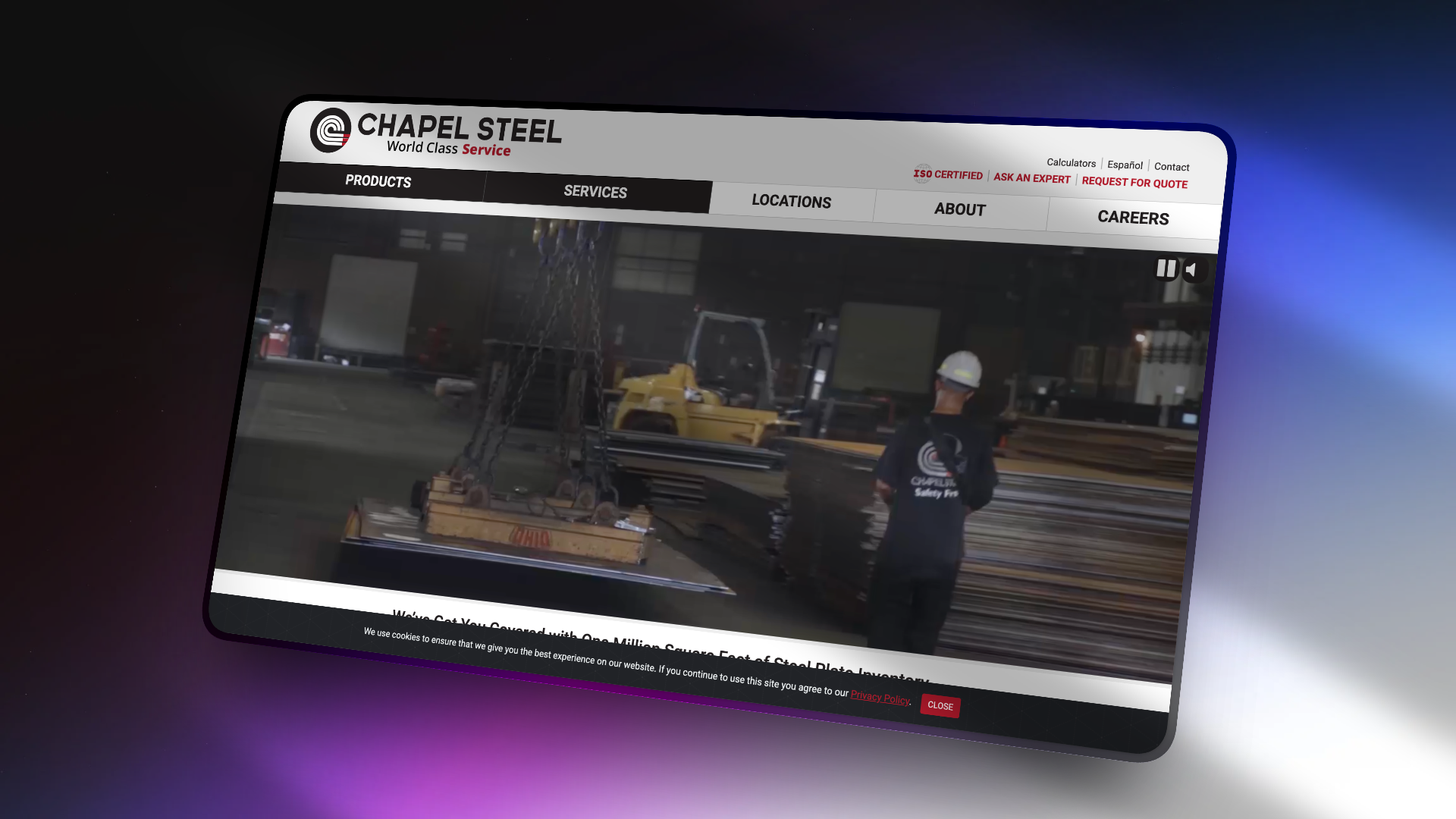
For most B2B industrial manufacturers, the website is the virtual storefront of your business, and acts as the first sales rep for you. Engineers and procurement teams research long before they ever talk to sales, and in 2026 that research increasingly starts in an AI chat bot rather than a search box.
Here are the manufacturing website design trends we see delivering the most value this year, and why they matter now.
1. AEO / GEO Optimization: Getting Found by AI
Manufacturers are now asking the new question: how do we show up when a buyer asks ChatGPT, Gemini, Claude, or Perplexity for a supplier? Two trends have emerged to answer it:
- AEO (Answer Engine Optimization): structuring content so it can be pulled directly as the answer to a specific question.
- GEO (Generative Engine Optimization): making your company clearly understood, and trustworthy enough to be cited, in AI-generated responses.
Three practical tactics are leading the way.
Why schema markup matters
Schema markup is structured data added to your pages that labels information in a way machines can read without guessing: who you are, what you make, where you operate, what certifications you hold, and what each product or service is. Types like Organization, Product, Service, FAQPage, and LocalBusiness turn a page of marketing copy into clear, verifiable facts. That clarity helps both traditional search engines and AI tools represent your company accurately, and can earn richer search results.
Why an llms.txt file matters
An llms.txt file is a plain-text file at the root of your site (yourdomain.com/llms.txt) that gives AI tools a concise, curated guide to your most important pages: capabilities, industries served, certifications, and contact paths. It is still an emerging, proposed standard, and not every AI platform reads it today. But it costs little to add, forces you to define how you want to be described, and positions you early if adoption grows. Treat it as a low-effort supplement, not a replacement for strong content and schema.
Why FAQs matter
Buyers ask AI tools full questions: "Which manufacturers can create a steel pressed part with ISO 9001 certification?" FAQs written in that same natural, question-and-answer format give AI and search engines ready-made, quotable answers. Adding them to your services, products, and industry pages, and answering with specific details (materials, tolerances, lead times, volumes, certifications), and pair them with FAQPage schema.
2. Custom Request for Quote (RFQ) Systems
Asking buyers to call your sales number or email you is being left in the past. Industrial buyers have limited time and want an easy path to the next step. In 2026, an on-site RFQ system is a must-have, and optimizing the RFQ path continues to be one of the strongest trends in the industry.
A strong RFQ experience looks like this:
- Reachable from every key page. Place an RFQ call to action on service, product, and capability pages, plus the header, so buyers never hunt for it.
- Short, purposeful forms. Collect name, email, phone, what they need, quantity, and timeline. Only ask for more when it genuinely speeds up quoting.
- File uploads. Let buyers attach CAD files, drawings, and specs (STEP, PDF, DXF), since most quotes depend on them.
- Confirmation and expectations. After submitting, show a clear thank-you message and state when they'll hear back.
- Connected to your workflow. Submissions should flow straight into your CRM or a monitored sales inbox, with instant notification and source tracking, so the team can quote quickly. Speed to quote is often what wins the job.
3. Resources Engineers Actually Use
Technical buyers want proof and detail before they commit. Leading manufacturers are building sites around that need:
- Downloadable spec sheets, CAD models, and certifications that don't require a long form to access
- Searchable product catalogs with filters for material, size, and application
- Product configurators and selection tools that guide buyers to the right part
- Capability matrices showing equipment, tolerances, materials, and volumes at a glance
4. Trust Signals and Real-World Proof
When a purchase involves tight tolerances and long relationships, credibility is everything. Feature certifications (ISO, AS9100, IATF), industries served, case studies with measurable results, customer logos, and real photos and video of your facility, equipment, and team. Authentic imagery consistently outperforms generic stock photos, and a short plant-tour video can do the work of a site visit.
5. Speed, Mobile, and Accessibility
Many buyers research from a phone on the plant floor or between meetings. Fast load times, clean mobile layouts, and tap-friendly forms are table stakes. Accessibility (following WCAG guidelines) broadens your audience, reduces legal risk, and tends to improve SEO and usability for everyone.
6. Analytics That Tie the Website to Revenue
The best manufacturers measure more than traffic. Track RFQ submissions, spec-sheet downloads, and which pages lead to quotes, and connect that data to your CRM so you can see which content drives real opportunities. Increasingly, that includes watching referrals from AI platforms alongside traditional search.
Putting It Into Practice
You don't need to do everything at once. A sensible order for most manufacturers:
- Fix the basics: speed, mobile experience, and clear capability pages.
- Build a streamlined RFQ path connected to your CRM.
- Add schema markup and FAQs to your most important pages.
- Publish an llms.txt file and keep it current.
- Strengthen trust signals and technical resources over time.
Ready to Update Your Manufacturing Website?
Dynamic Digital helps industrial manufacturers design and develop websites built to be found, trusted, and turned into quote requests. Contact us to talk about where your site stands and what to prioritize next.
Ready to move from evaluation to a plan?
Share where you are stuck - scope, vendors, or timeline - and we will outline a practical next step for your team.
We’re ready when you are.
Schedule a free 15-minute discovery call.
We'll listen to where you are and share how we can help.