
Dynamic Digital
Best manufacturing website examples (and what makes them work)
Looking at manufacturing website examples only helps if you look for the right things. Not who has the flashiest homepage. Whether a buyer can tell what the shop does, trust them enough to shortlist them, and take a next step without hunting.
For the full pattern behind a site that generates RFQs, see Manufacturer Website Design.
What we looked for (without a scorecard)
No rating tables. Just what's good and what stands out.
- Clear capabilities a plant manager or buyer can use
- An obvious next step toward a quote or drawing upload
- Proof (certs, parts, industries, real contact)
- Whether it works on a phone
- Whether technical content is easy to find
Non-Dynamic Digital examples first
Job shops, OEMs, and instant-quote platforms we do not build. Same lens on each: what's good and what stands out. Dynamic Digital client sites close the list below.
CNC + sheet metal
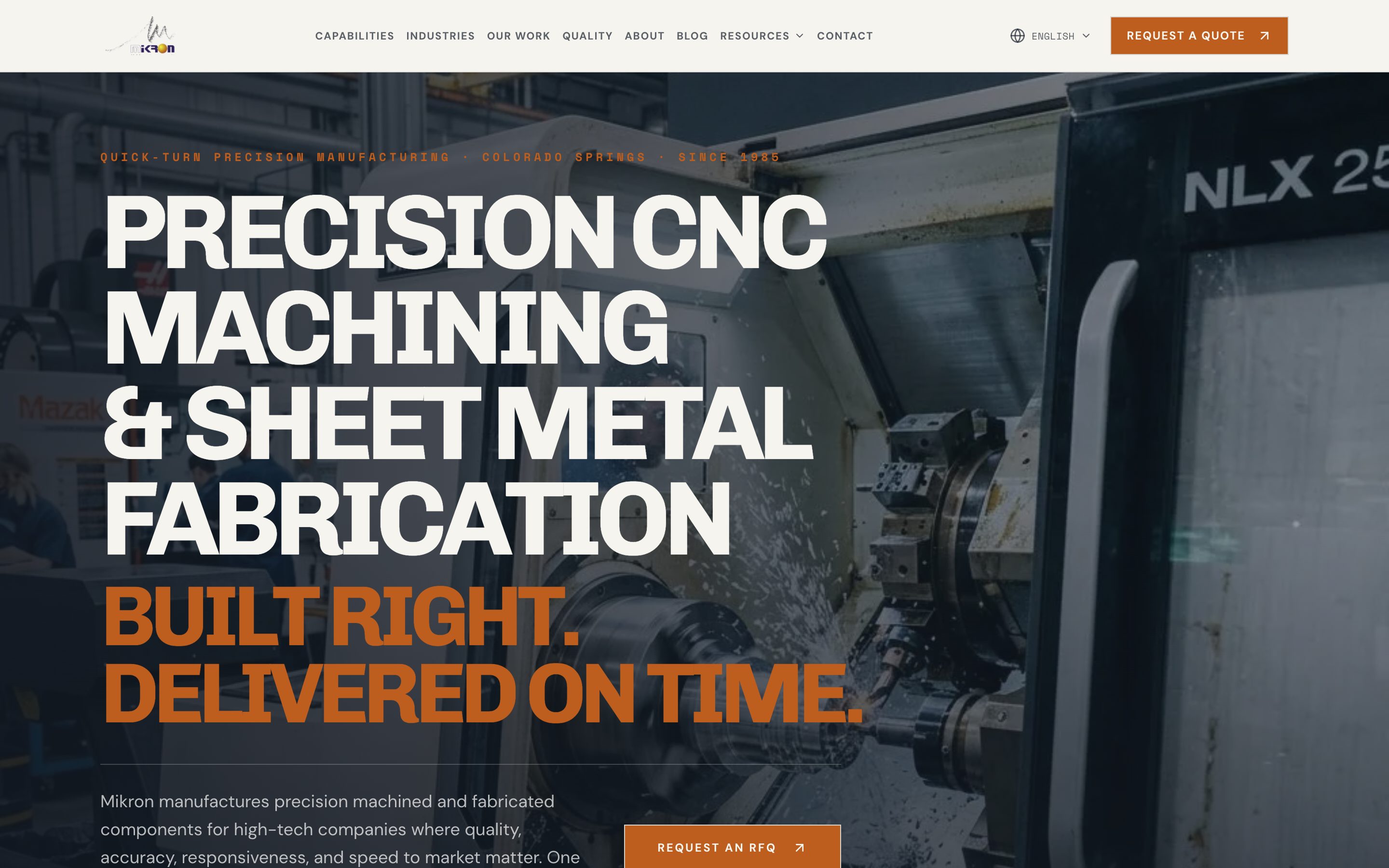
Mikron Manufacturing
What's good
You know they machine and fabricate in the first scroll. Capabilities are broken into CNC, sheet metal, welding, assembly, and value engineering. ISO and ITAR show up early. Finished parts are photographed on their floor, not stock imagery. The path from send drawings through review, quote, and delivery is written like a real shop process.
What stands out
The RFQ education library. Dozens of plain answers about how to build a complete RFQ, what files to send, and what to compare beyond price. Most job-shop sites hide that knowledge. Mikron puts it in front of buyers before the call.
OEM fab + CNC, Northeast
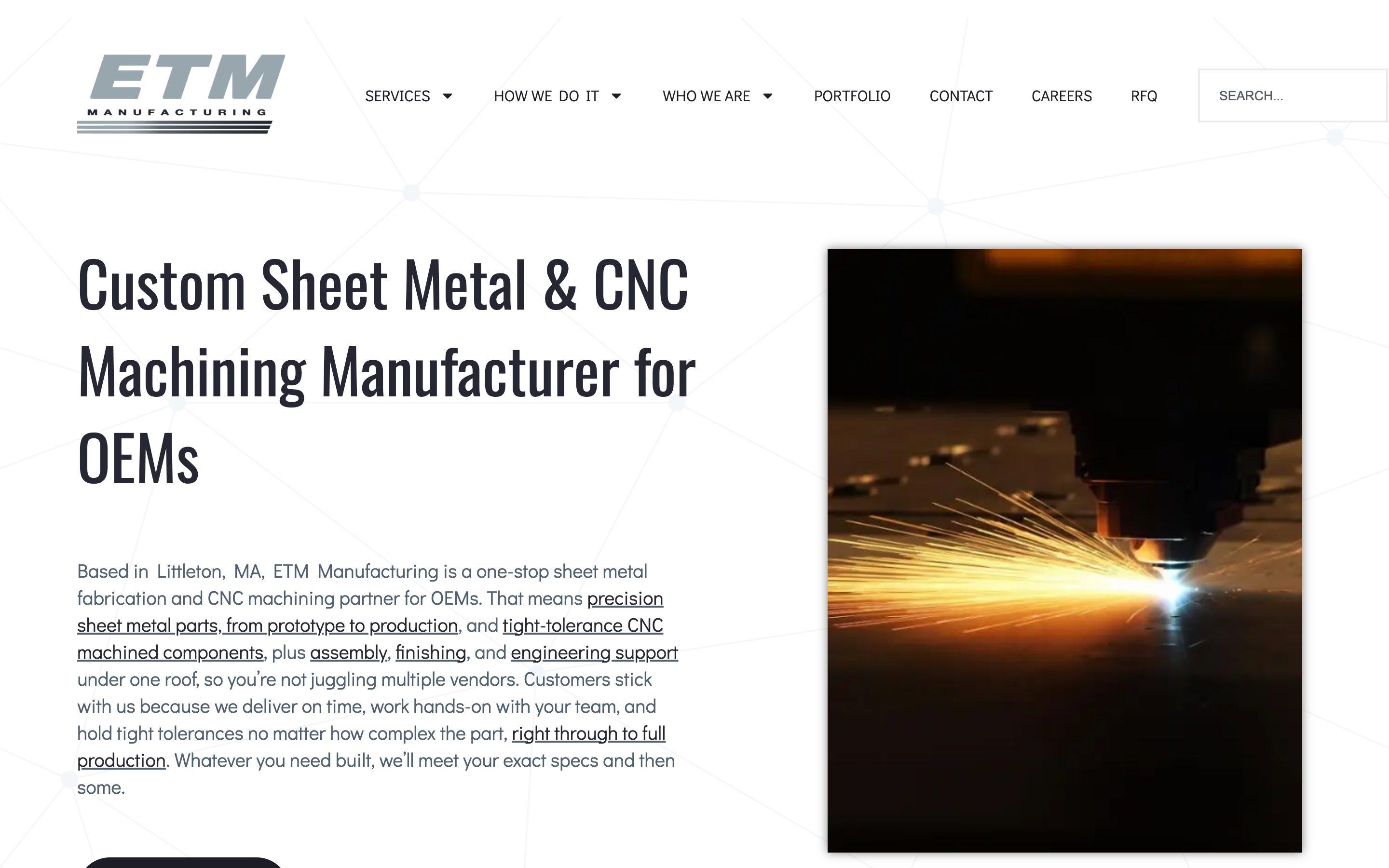
ETM Manufacturing
What's good
Speaks OEM language: prototype to production, DFM, one roof for sheet metal and CNC. Service pages for fab, machining, engineering, and assembly. Process steps include a clear submit an RFQ. Customer quotes sound like buyers, not agency copy.
What stands out
They frame capabilities around situations shops recognize (volumes too small for big vendors, tired of educating suppliers). That situation-first framing is easier for a stranger to map onto their own RFQ than a pure equipment list.
Instant quote / DFM
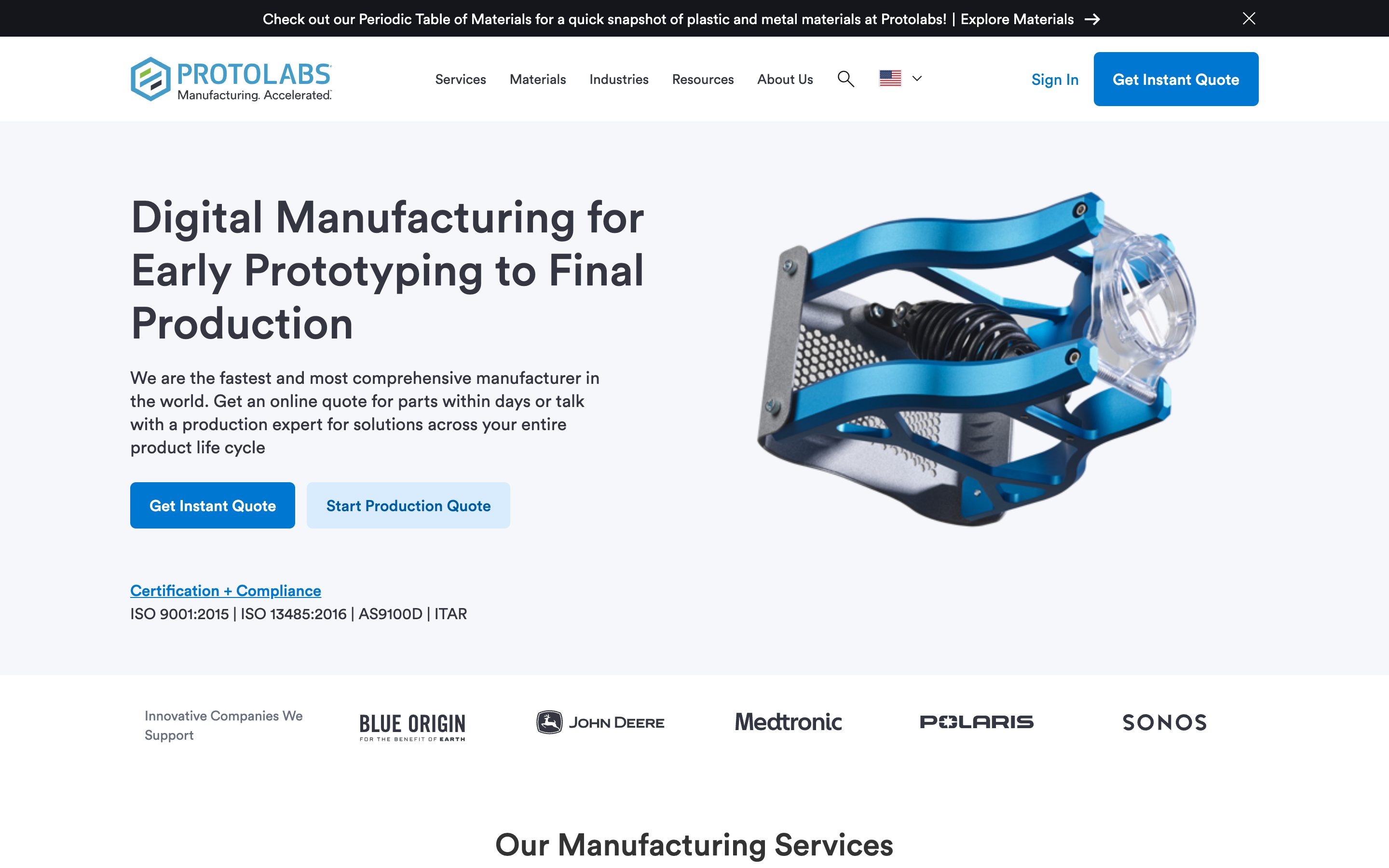
Protolabs
What's good
Upload a CAD file, get manufacturability feedback and pricing, order. Services (CNC, molding, additive, sheet metal) are obvious. Certifications and process guides support trust at scale. The quote path is the product.
What stands out
This is the RFQ UX ceiling. Friction between I have a file and I know the next step is almost gone. Most owner-run shops should not clone the marketplace model. They should borrow the idea: structured fields, file upload, and a next step that matches how estimating works.
Marketplace RFQ
Xometry
What's good
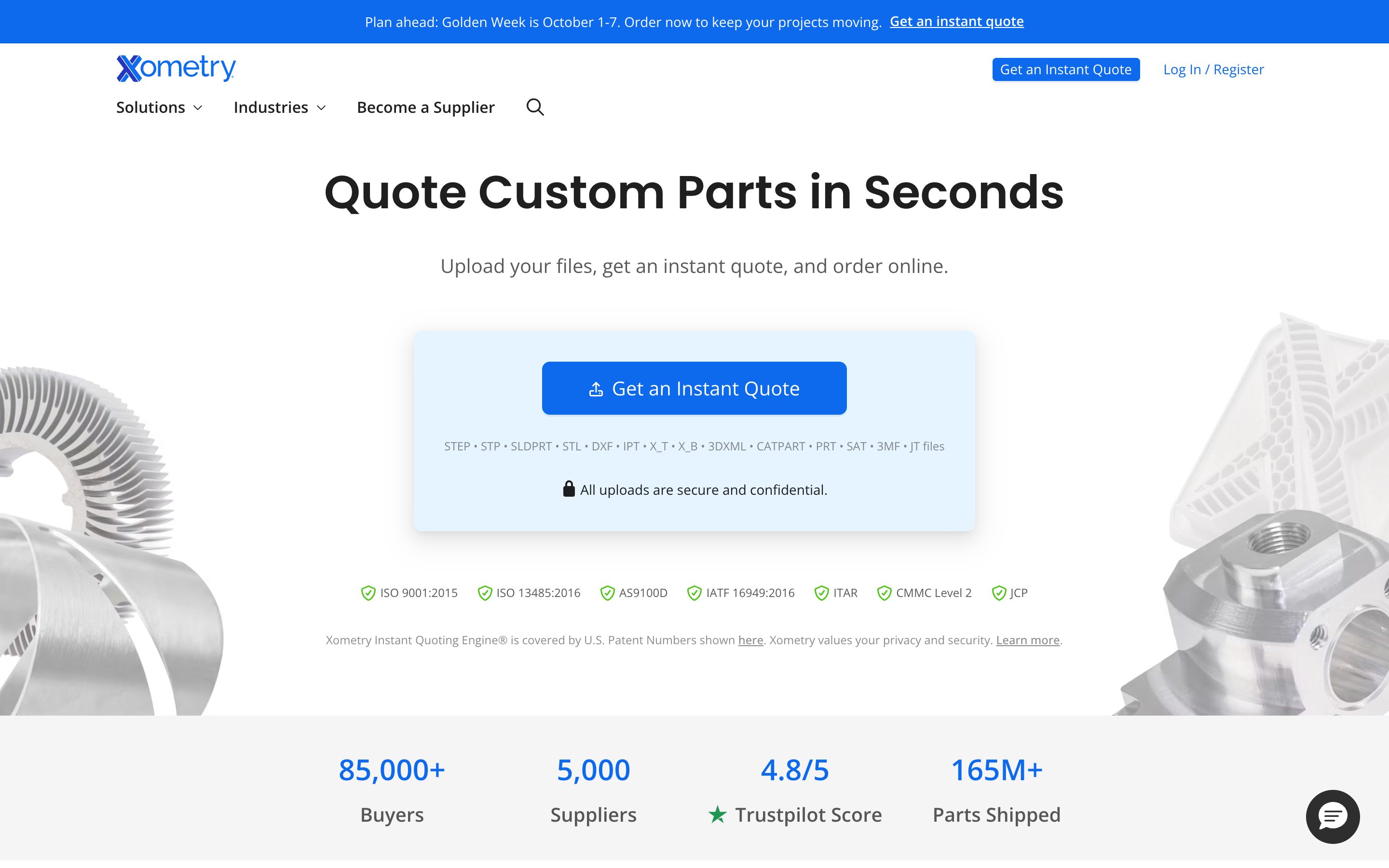
File upload and quoting sit in the hero. Process coverage is broad. Trust signals (ISO, ITAR, customer stories) sit next to the action. Hard to miss how to start.
What stands out
Speed-to-quote as the brand. Useful contrast for traditional shops: platforms win on convenience; a single accountable floor wins on relationship and specialty. Your site can still make send the drawing obvious without pretending to be a network.
Mid-Atlantic machine shop · Telford, PA (Bucks / Montgomery)
Cer-Mac Inc.
What's good
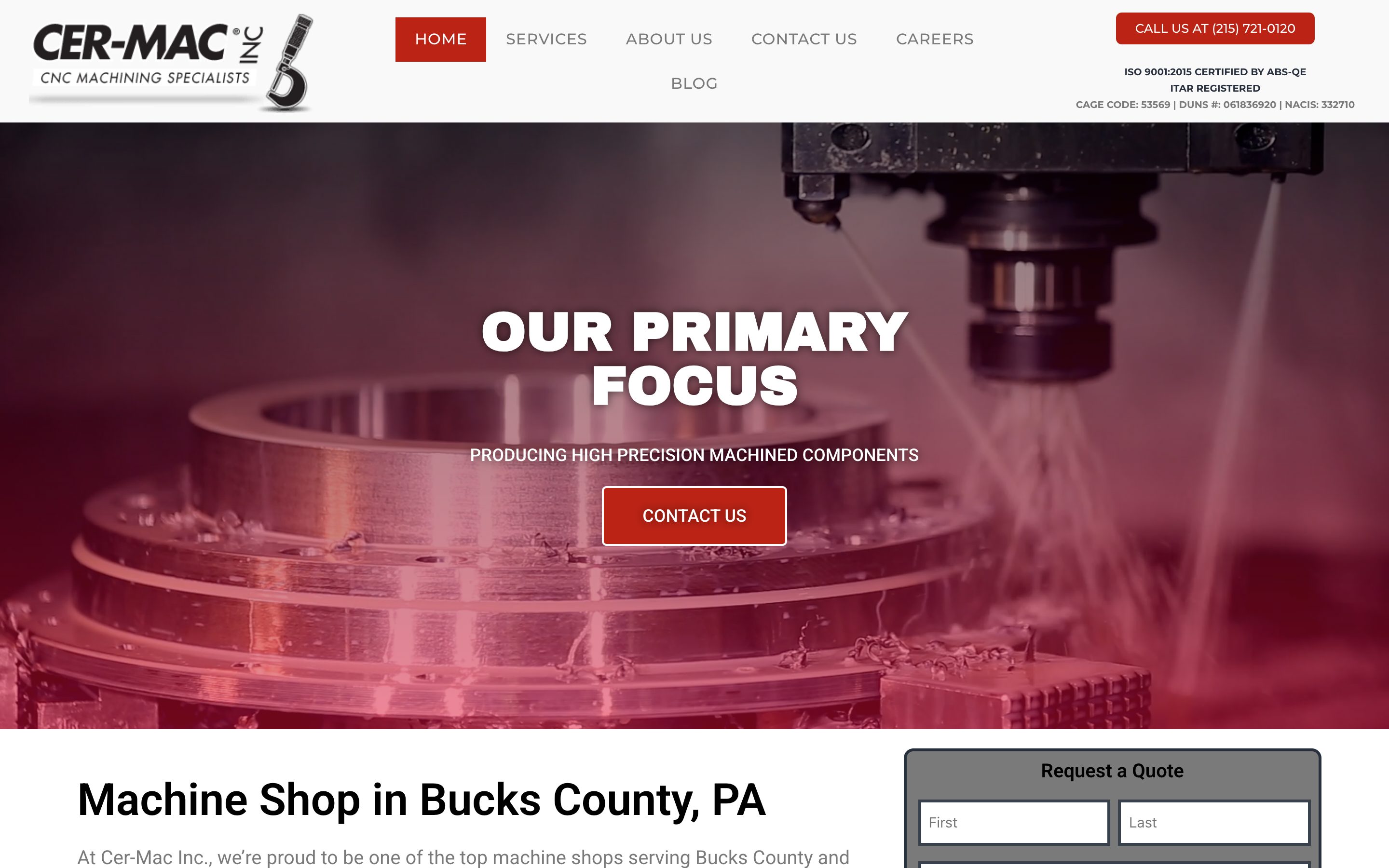
Real Greater Philly presence. CNC, Swiss, EDM, lapping, and grinding are named. Industries (oil & gas, aerospace, medical, optical, semiconductors) are listed. Testimonials from recognizable buyers. Phone and email are easy to find. You can tell it is a working machine shop, not a template with industrial stock photos.
What stands out
Local relevance done with real equipment and longevity. The teachable gap is the quote path: mostly contact us / free quote rather than a drawing-friendly RFQ form, and a lot of energy goes into geo pages. A stronger Mid-Atlantic version keeps the local proof and adds clearer process pages plus a structured RFQ.
Mid-Atlantic mix
KLT Group
What's good
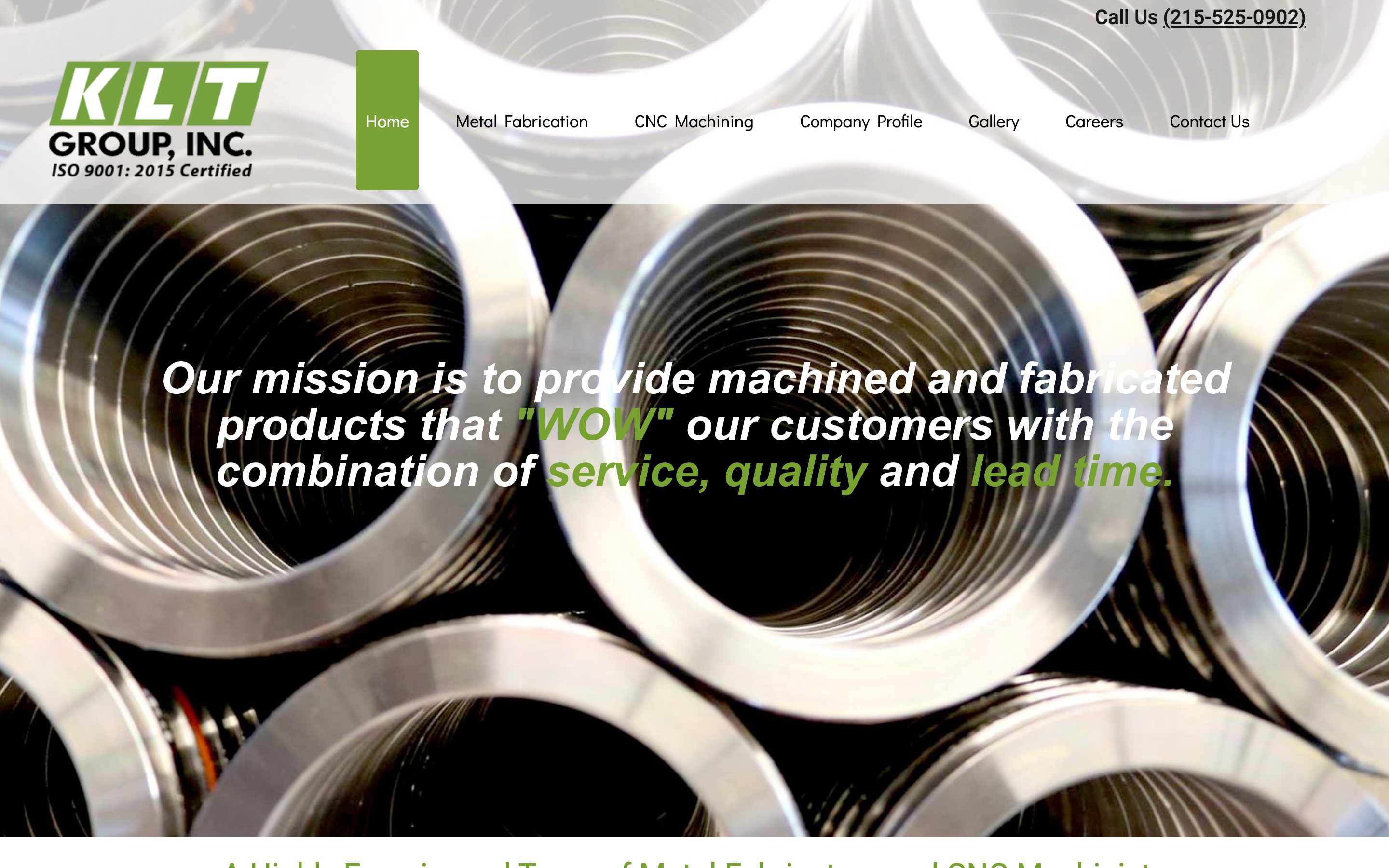
Lists real processes (laser, waterjet, forming, welding, CNC). ISO messaging. Specific customer stories about rush work and lead time. Phone number is hard to miss. Serves the Philly suburbs and wider Mid-Atlantic.
What stands out
This is the pattern many shops sit in. The floor is real. The website still asks strangers to call rather than guide them through capabilities into a drawing upload. Speed stories help when they are concrete. The conversion path is the open opportunity.
More manufacturing context: manufacturing industry page.
Client closers (honest works in progress)
Same lens: what's good and what stands out. These three are Dynamic Digital manufacturing clients. They are not a polished trophy reel. As site refreshes launch, updated versions may replace them here.
Steel plate · Dynamic Digital client
Chapel Steel
Dynamic Digital clientWhat's good
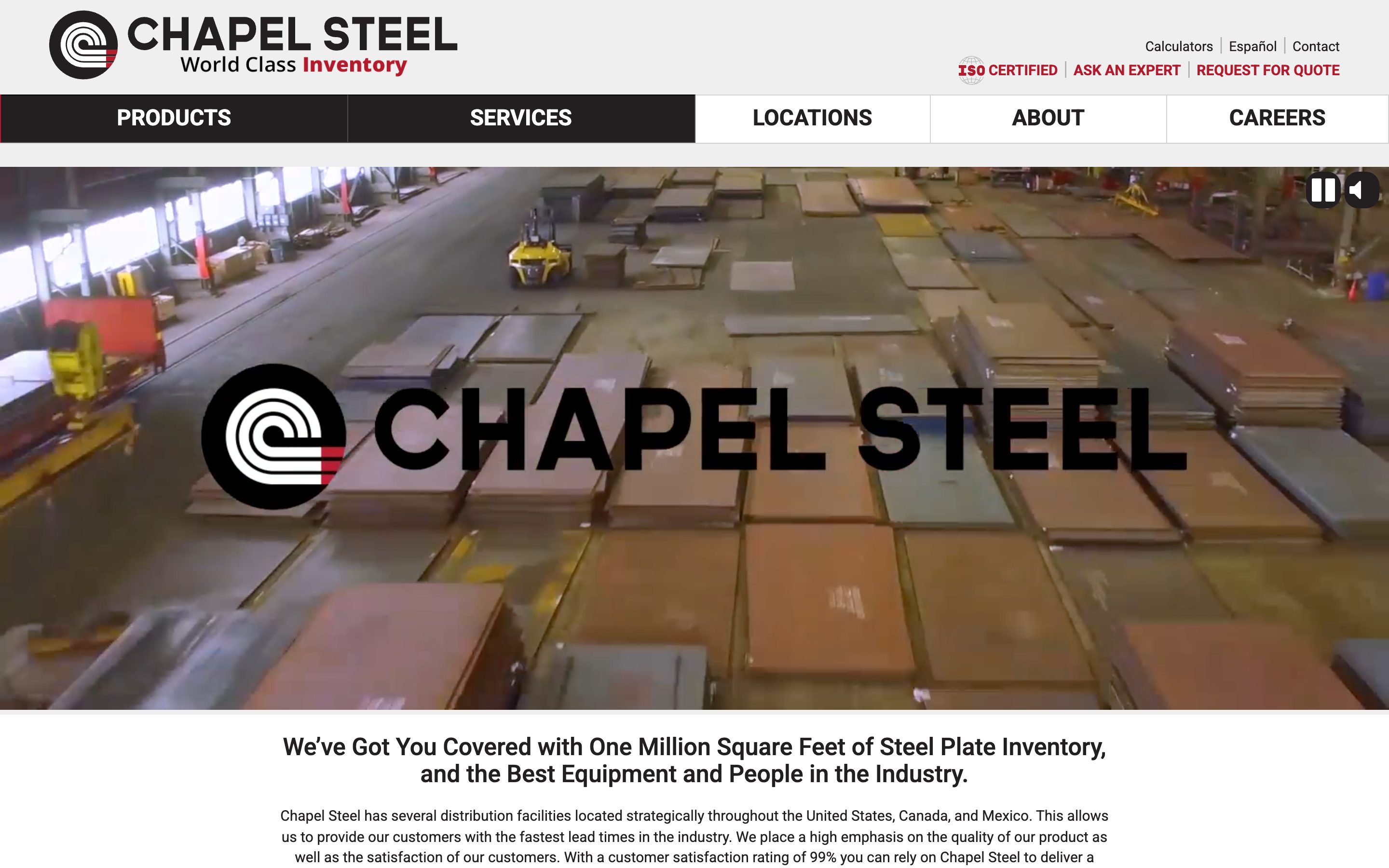
Specialty is clear (carbon, high-strength, abrasion-resistant plate). Processing capabilities are listed (plasma/oxy cutting, beveling, drilling, forming, shot blast). National footprint with a local-service story. Phone and email are easy to find. Inventory scale shows up without apology.
What stands out
Product authority first. You know what they sell and process. The next step is still mostly contact, locations, and email rather than a structured RFQ. Specialty credibility is the model; a clearer quote start for new buyers is the lesson. Honest work in progress: as site refreshes launch, this writeup may be updated or replaced.
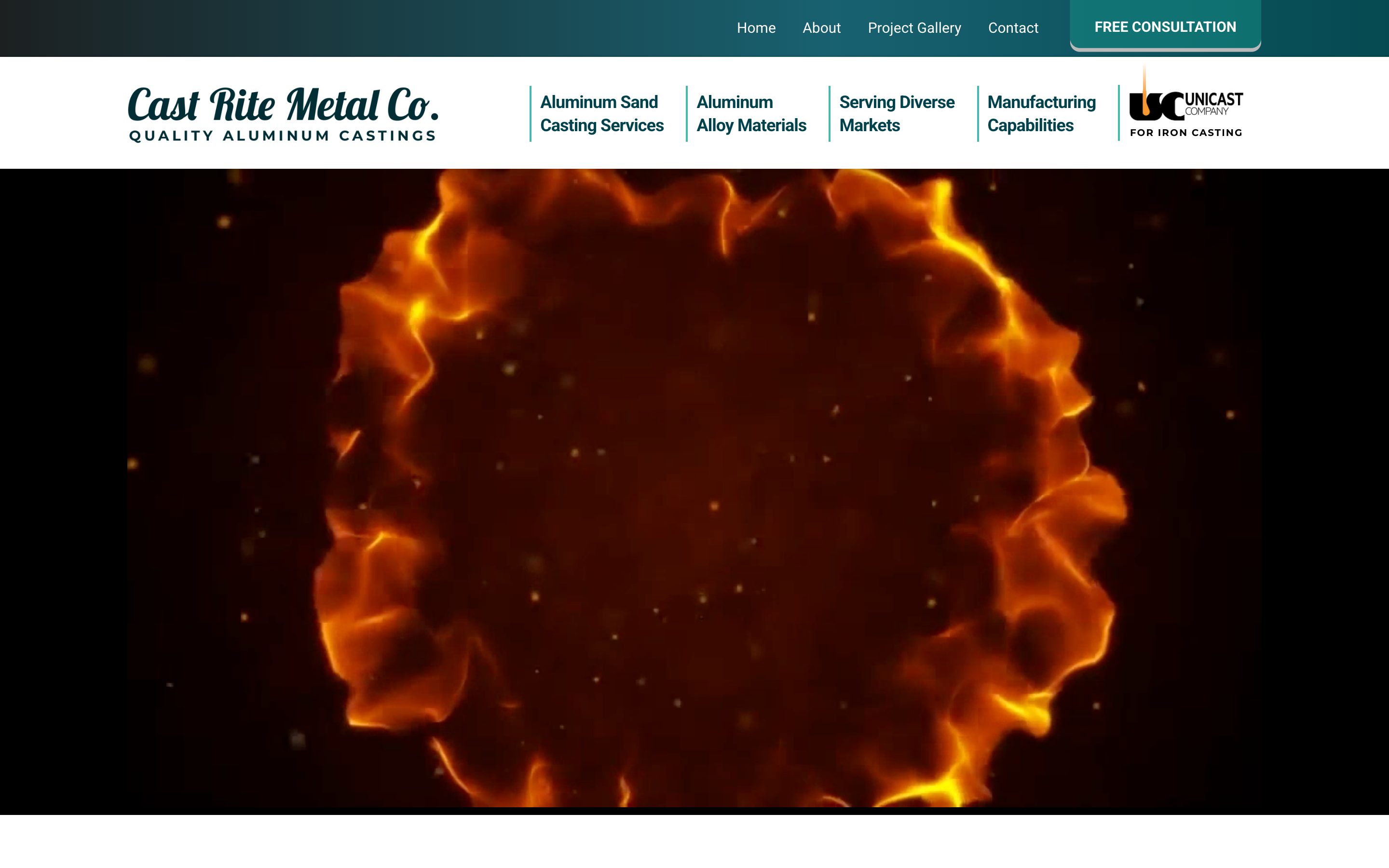
Aluminum sand castings · Dynamic Digital client · Birdsboro, PA
Cast Rite Metal
Dynamic Digital clientWhat's good
You know it is an aluminum sand casting foundry almost immediately. Process points are plain (pattern shop, molding options, stocking programs, secondary ops). Mid-Atlantic location with a Northeast shipping story. Explicit request-a-quote contact block. Gallery and video invite buyers to see real work.
What stands out
Process clarity in everyday language. Aluminum sand castings since 1970 beats vague metal-solutions copy. Quote path is contact-driven. The foundry voice is the model; denser shortlist proof (certs, project context) next to the ask is the lesson. Honest work in progress: as site refreshes launch, this writeup may be updated or replaced.
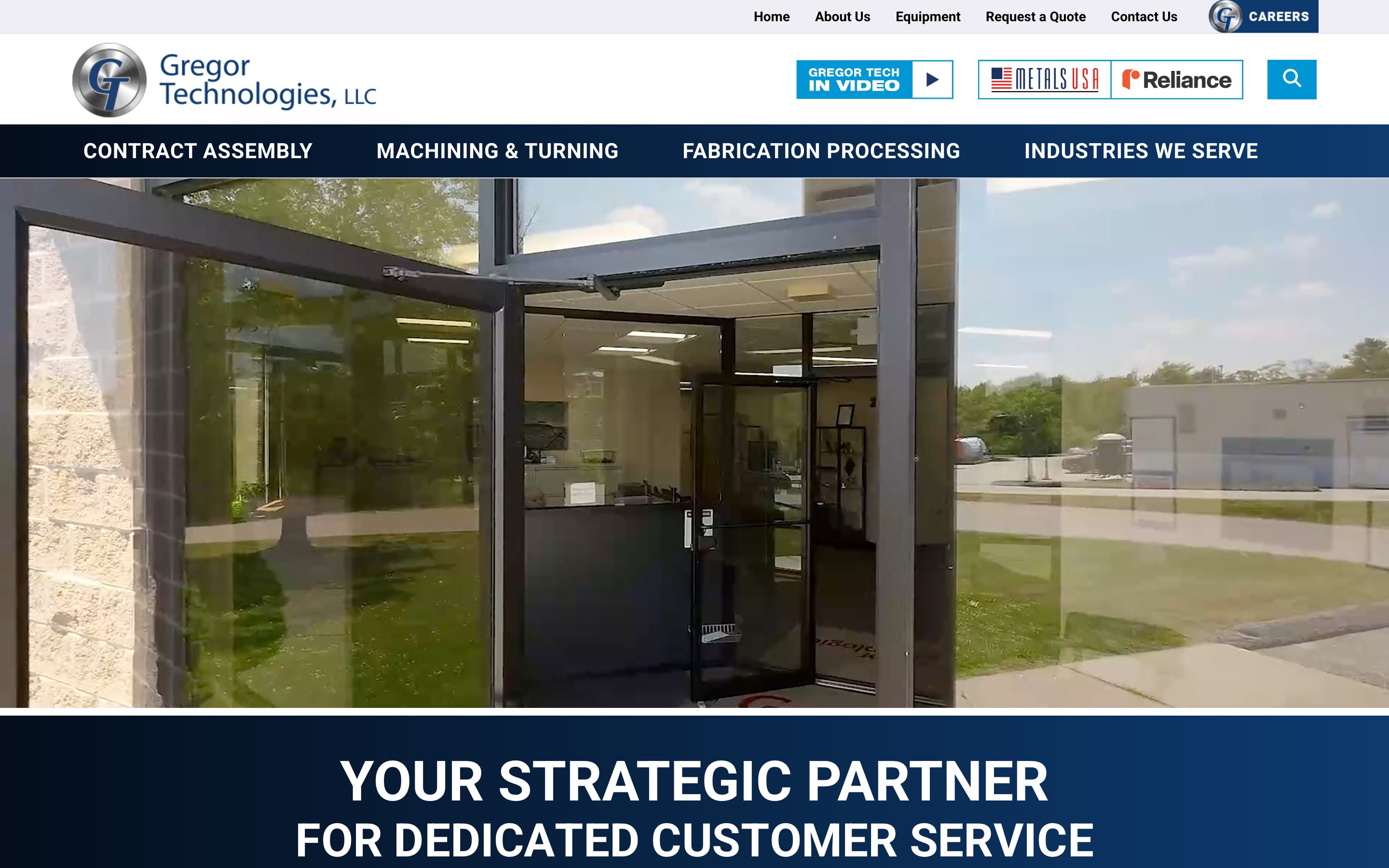
CNC, sheet metal, assembly · Dynamic Digital client
Gregor Technologies
Dynamic Digital clientWhat's good
Capabilities grouped the way buyers buy: CNC milling/turning/Swiss, sheet metal, contract assembly, engineering support. Northeast footprint that includes PA and NJ. Facility tour CTA for people who want to see the floor. Location and hours are clear.
What stands out
Clean capability buckets. Conversion is still largely contact or schedule a visit, not a drawing-upload RFQ. Proof (certs, industries, finished parts) sits a click away from the ask. Strong capability grouping; the teachable gap is RFQ UX and trust density next to those buckets. Honest work in progress: as site refreshes launch, this writeup may be updated or replaced.
Patterns that keep showing up
- 01
Say the process
CNC, fab, casting, plate processing. Buyers search that way.
- 02
Make the next step obvious
Platforms put upload-and-quote in the hero. Traditional shops can still offer structured fields and file upload.
- 03
Put proof near the ask
Certs, parts, and industries should not hide on About.
- 04
Check it on a phone
Many shortlists start between meetings.
- 05
Local helps; city-name loops do not convert
Mid-Atlantic shops should sound local without replacing capability pages.
- 06
RFQ UX beats contact-only
Even strong capability sites leak work when the only next step is a phone number. Details live in Manufacturer Website Design.
Book a 15-minute discovery call
Want a plain look at your own site against these patterns? We review capabilities findability, quote path, mobile, proof, and handoff.
Or call the Willow Grove team: 215-488-1124 · Contact. Also read Manufacturer Website Design.
Frequently asked questions
We’re ready when you are.
Schedule a free 15-minute discovery call.
We'll listen to where you are and share how we can help.